
Restaurant Drain Service
Restaurant drain service for New Jersey kitchens, covering sinks, floor and trench drains and scheduled jetting, done during closed hours so service never stops.
Restaurant Drain Service details
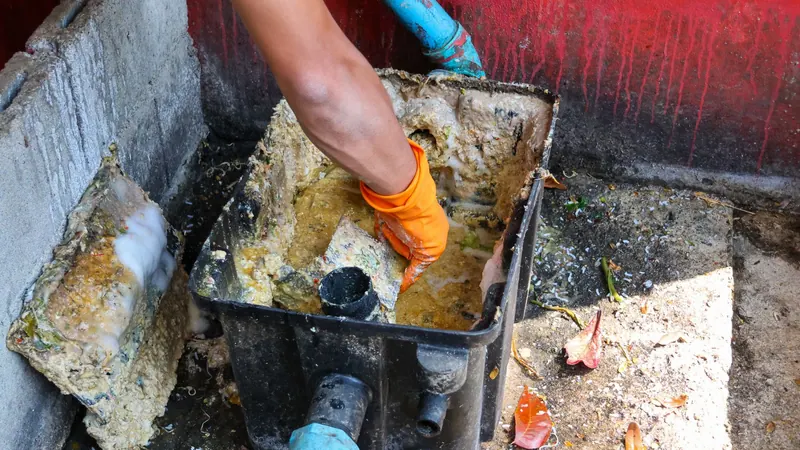
Fats, oils and grease cause many sewer blockages, and New Jersey towns and sewer authorities expect food businesses to manage them. Here are the FOG basics every kitchen owner and manager should know.
Quick answer: FOG means fats, oils and grease. Many New Jersey towns and sewer authorities require food service businesses to keep grease out of the sewer with a working grease trap or interceptor, regular cleaning and service records. Rules vary by location. Check with your local sewer authority or municipal office for the requirements that apply to your kitchen.
FOG stands for fats, oils and grease. It comes from cooking oil, butter, meat fats, sauces, dairy and food scraps. Hot water carries it down the drain as a liquid, but it cools and hardens in the pipes. Over time it builds up on pipe walls in your building and in the public sewer, narrowing the line until it blocks. Cold water does not solve the problem either, since grease still settles in the line.
Grease blockages in public sewers can cause sewage overflows into streets, basements and waterways. That is why sewer authorities and towns pay close attention to food service establishments. Managing FOG protects your own kitchen lines too, since grease buildup inside your building is a leading cause of kitchen backups during service. Overflows can lead to cleanups, notices and unhappy neighbors. Inside the building, a grease backup can close the kitchen during service and force staff to stop cooking until the line flows again.
A grease trap or interceptor slows down wastewater from the kitchen so grease can float to the top and solids can sink to the bottom. Cleaner water in the middle flows out to the sewer. Baffles inside the device help separate the layers. Smaller grease traps often sit under sinks inside the kitchen. Larger interceptors are usually in the floor or outside below grade. Size matters, since a small trap fills faster in a busy kitchen.
The device only works while it has room. As grease and solids build up, the working space shrinks, and grease starts passing through. A full trap is almost as bad as no trap at all. That is why regular cleaning matters more than the device itself. A trap packed with hardened grease also loses capacity even after pumping, unless the walls and baffles are scraped. Inlet and outlet pipes can clog too. Regular service by a crew that cleans the whole device keeps it working as designed.

Rules for food service establishments are set by local towns and sewer authorities, so they differ from place to place. Common themes include requiring a grease trap or interceptor, cleaning it often enough to keep it working, keeping records of cleaning and making those records available to inspectors. Some places also set rules about what kitchens may pour down the drain. Requirements can also change over time, so check again periodically.
Wastewater agencies such as the Passaic Valley Sewerage Commission, the Middlesex County Utilities Authority, the Ocean County Utilities Authority and the Camden County MUA serve many towns, and local rules may come from the town, the authority or both. Do not assume the rules where you opened your last location apply to a new one. Check with your local sewer authority or municipal office. A quick call before opening saves trouble later.
The right cleaning interval depends on the size of your trap, your menu and your volume. A high volume kitchen with fryers and grills fills a trap faster than a cafe that serves mostly sandwiches. A common rule of thumb is to clean before grease and solids take up about a quarter of the trap, but your local rules may set a specific minimum. Ask your sewer authority whether it sets an interval.
Seasonal businesses need to think ahead. Shore restaurants that get very busy in summer can fill a trap much faster in July than in March. Schools and cafeterias may slow down during breaks. Track what each cleaning finds, and adjust the schedule so the trap is serviced before it gets too full. Keep notes on how full the trap was each time. Over a year, those notes show a clear pattern and help you choose an interval that keeps the trap working without paying for cleanings you do not need.
Good habits reduce the grease that reaches the trap and your lines. Scrape plates and pans into the trash before washing. Collect used fryer oil in containers for recycling instead of pouring it down any drain. Use strainers in sinks and floor drains to catch food solids. Train every new staff member, since habits slip during busy shifts. Post simple reminders near sinks and dish stations so good habits hold during the rush.
Avoid relying on enzymes, additives or chemical drain openers to dissolve grease, unless your local authority allows them and you understand what they do. Some products only move grease further down the line, where it hardens again. Never mix chemical drain products. When lines slow, call for mechanical cleaning or jetting instead. Mechanical cleaning removes grease from the line instead of moving it. Ask your service provider to show you what was found, so you can see whether kitchen habits are working.
Need help now? Call (518) 776-7838, we answer 24/7. Learn more about our grease trap cleaning service.
Many food service businesses are required to have a grease trap or interceptor, but requirements vary by town and sewer authority. Check with your local sewer authority or municipal office before opening or renovating a kitchen to learn what applies to your location.
Contact your local sewer authority or municipal office and ask about requirements for food service establishments. They can tell you about grease trap requirements, cleaning frequency and record keeping. Keep a copy of what they tell you with your service records.
Keep a written service record for each cleaning, showing the date, the device serviced, the work done and the condition found. Many New Jersey towns expect records like these. Fullerton leaves a written record after every grease trap service for your file.
No. Hot water only moves the grease further into the pipe, where it cools and hardens. Collect used cooking oil in containers for recycling or proper disposal. Keeping oil out of the drain protects your lines, your trap and the public sewer.
Restaurant drain service for New Jersey kitchens, covering sinks, floor and trench drains and scheduled jetting, done during closed hours so service never stops.
Restaurant Drain Service detailsHigh pressure hydro jetting scours grease, scale, sludge and fine roots from New Jersey drain and sewer lines, cleaning the full pipe wall instead of punching a hole.
Hydro Jetting detailsWe answer 24 hours a day, 7 days a week. Call and talk to a real person, or request service online and we will call you back.
Tell us what is backing up. Our team usually calls back within two hours. Drain overflowing right now? Call us, we answer 24/7.
Or call (518) 776-7838, 24 hours a day